
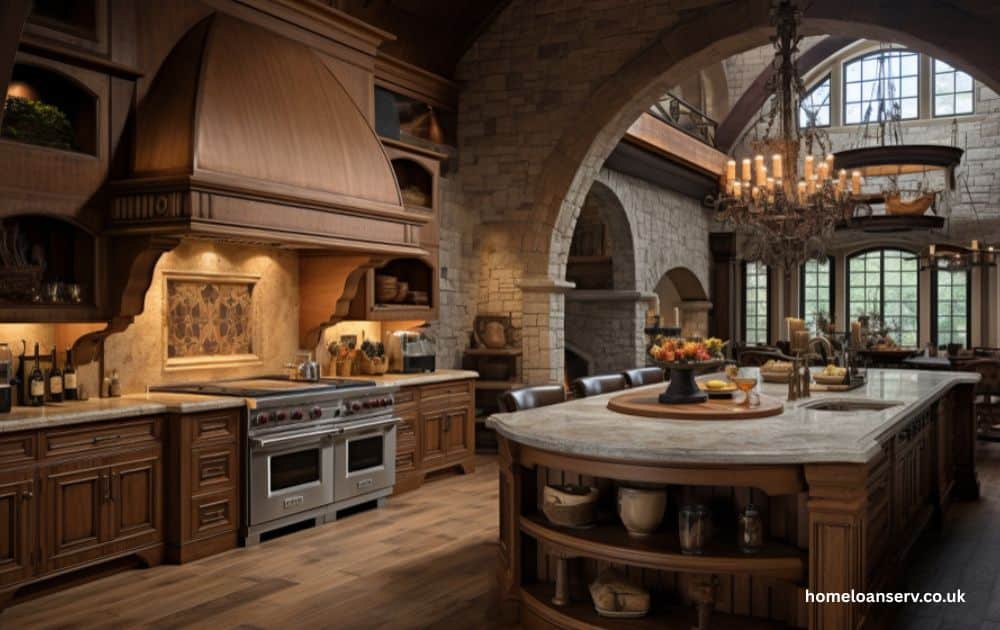
There is something quietly comforting about the idea of a Victorian kitchen, a room that feels less like a functional space and more like the soul of a household. In the nineteenth century, this was where a home truly came alive, tucked away from the formal parlors yet humming with quiet purpose from sunrise to sunset. It was a place shaped by patience, routine, and care, where every small task carried meaning. Even today, something about the image of a Victorian kitchen still tugs gently at our hearts.
The Heart of the Home
In Victorian households, the kitchen was often considered the true center of family life, even though guests rarely saw it. A Victorian kitchen was where warmth gathered first, both literally and emotionally, long before it reached the rest of the house. Meals were planned with intention, and nothing about the process felt hurried or careless. The rhythm of the Victorian kitchen quietly dictated the rhythm of the entire household, grounding each day in something familiar and steady.
The Cast Iron Stove
At the center of almost every Victorian kitchen stood the cast iron stove, a heavy, dependable presence that anchored the room. It required constant attention, from feeding it coal or wood to carefully regulating its heat for baking, boiling, or simmering. Despite its demands, the stove became a trusted companion within the Victorian kitchen, almost like a quiet member of the household. Its steady warmth was often the very first comfort a person felt upon entering the kitchen on a cold morning.
The Scullery and Its Secrets
Just beyond the main room, many Victorian kitchens had a small adjoining space known as the scullery, used for washing dishes, plucking poultry, and other messier tasks. It was less glamorous than the kitchen itself, yet essential to keeping the household running smoothly. The scullery often had its own stone sink and simple wooden shelving, built purely for function rather than beauty. This humble space quietly absorbed the chaos so the Victorian kitchen could remain a place of calm and order.
Pantries and Preservation
Long before refrigeration became common, a well-run Victorian kitchen relied heavily on well-stocked pantries lined with preserved goods. Jars of pickles, jams, and cured meats sat neatly on shelves, the result of hours spent preserving seasonal harvests. This careful preparation meant families could enjoy variety even during leaner winter months. There was a quiet wisdom in this practice, a reminder that the thoughtful habits of the Victorian kitchen could bring comfort much later.
The Role of Servants
In wealthier households, a Victorian kitchen was often run by a small team of servants working together under one cook’s watchful eye.
- The cook oversaw the entire kitchen and guided every dish
- Kitchen maids handled chopping, cleaning, and daily prep work
- Scullery staff managed dishes, deliveries, and general upkeep
Copper Pots and Gleaming Pans
Hanging from hooks or displayed along the walls, copper pots and pans were both practical tools and quiet symbols of pride within the Victorian kitchen. Cooks polished them regularly, not simply for appearance but because well-maintained cookware distributed heat more evenly. The gentle gleam of copper against dim kitchen light created a warm, almost golden atmosphere. It is easy to imagine the soft clinking sound these pots made as they moved through a busy Victorian kitchen.
The Kitchen Table
At the center of many a Victorian kitchen sat a large, sturdy wooden table, scarred and stained from years of use. This table served many purposes, from kneading dough to plucking vegetables to family members simply sitting nearby for conversation. Unlike the formal dining table elsewhere in the house, this one was honest and unpretentious. It quietly witnessed the everyday moments of the Victorian kitchen that never made it into history books, yet mattered most to those who lived them.
Morning Rituals
Mornings in a Victorian kitchen began early, often before the rest of the household had even stirred from sleep. The fire needed to be lit, water needed to be fetched, and bread dough often needed attention from the night before. There was a quiet dignity in these early hours, a sense of steady preparation before the day’s demands arrived. This unhurried start often set a peaceful tone that lingered throughout the rest of the day in the Victorian kitchen.
The Aroma of Baking Bread
Few things defined the Victorian kitchen quite like the smell of freshly baked bread drifting through the home. Baking was both a necessity and a small daily ritual, requiring patience as dough rose slowly near the warmth of the stove. The scent alone was often enough to draw family members toward the Victorian kitchen without a single word being spoken. It served as a gentle, comforting signal that something nourishing was being prepared with care.
Seasonal Cooking
A Victorian kitchen worked closely with the seasons, relying on what was fresh and available rather than what was simply convenient. Spring brought tender greens, summer brought abundance, autumn brought root vegetables, and winter called upon preserved stores. This seasonal awareness shaped not only meals but also the emotional rhythm of the household throughout the year. There was a quiet respect for nature’s timing within the Victorian kitchen, something modern kitchens sometimes overlook.
The Kitchen Garden
Many Victorian homes, especially those in rural or suburban settings, kept a modest garden just outside the door leading to the kitchen. Herbs, vegetables, and sometimes small fruit trees grew close enough to be gathered within minutes of cooking. This closeness between garden and stove meant the Victorian kitchen felt genuinely rooted in its surroundings. It also gave family members, including children, a gentle connection to where their food truly came from.
Tea Time Traditions
No discussion of Victorian domestic life feels complete without mentioning tea, a small but meaningful ritual that often began in the Victorian kitchen itself. Water was heated carefully, cups were warmed, and biscuits or small cakes were prepared with quiet attention to detail. Tea time offered a brief pause in an otherwise busy day, a moment to breathe and reconnect. Even now, this simple ritual born in the Victorian kitchen carries a comforting sense of familiarity that feels timeless.
Lighting the Victorian Kitchen
Before electricity became widespread, the Victorian kitchen relied on candlelight, oil lamps, and the glow from the stove itself for illumination. This soft, flickering light created shadows that danced gently across the walls as cooks moved about their tasks. While practical lighting was limited, it lent the room an intimate, almost storybook atmosphere. Working by such gentle light within a Victorian kitchen required focus and familiarity, skills passed down through years of quiet practice.
The Sound of the Kitchen
A Victorian kitchen was rarely silent, filled instead with the crackle of the fire, the clatter of pots, and the low murmur of conversation. These sounds blended together into a kind of familiar background music that marked the passing of the day. Even without words, the noises of the Victorian kitchen communicated comfort, productivity, and presence. Anyone who grew up near such a space likely remembers these sounds long after the smells and sights have faded.
Children in the Kitchen
Children were often welcomed into the Victorian kitchen, not merely to observe but to gently assist with small, age-appropriate tasks. They might stir a pot under careful supervision or help sort vegetables freshly brought in from the garden. These early lessons taught patience, responsibility, and an appreciation for where meals truly came from. Many cherished family recipes were passed down precisely this way, quietly, within the walls of the Victorian kitchen.
Special Occasion Feasts
During holidays or celebrations, the Victorian kitchen transformed into a place of heightened activity and anticipation. Extra dishes were prepared, special ingredients were carefully sourced, and the entire household seemed to move with renewed energy. These feasts required days of preparation, yet the effort was rarely seen as a burden. Instead, it reflected genuine care for the people who would soon gather around the table set from the Victorian kitchen.
The Evolution of Kitchen Design
As the Victorian era progressed, the Victorian kitchen slowly began shifting toward greater efficiency and improved sanitation. Ventilation improved, surfaces became easier to clean, and early conveniences started appearing in wealthier homes. Yet even as practicality increased, the emotional character of the kitchen remained largely unchanged. It continued to serve as a gathering place built on warmth, effort, and shared purpose, regardless of how modern its tools became.
From Victorian Kitchens to Modern Dining
Interestingly, echoes of the old-world Victorian kitchen can still be felt in unexpected modern places today. California Pizza Kitchen at Victoria Gardens, for instance, offers a lively, welcoming space where friends and families gather over shared plates, much like generations once did around a simple wooden table. While the setting is entirely contemporary, the underlying comfort of gathering to eat together feels remarkably familiar to anyone who knows the story of the Victorian kitchen. It is a gentle reminder that the desire for connection through food has never truly changed.
A Taste of Simplicity
In a similar spirit, Victoria’s Kitchen reflects values that would feel quite at home in a Victorian kitchen, an emphasis on natural, honest ingredients prepared with care. Rather than relying on shortcuts, the focus remains on wholesome simplicity, much like the seasonal, preserved foods once stored in a Victorian kitchen. This approach speaks to a growing appreciation for food that feels genuine rather than overly processed. It shows how the timeless values of the Victorian kitchen can continue to shape modern choices in quiet, meaningful ways.
Lessons We Still Carry
Looking back at the Victorian kitchen, it becomes clear that its greatest legacy was not its tools or techniques but its spirit of care. Every task, however small, was approached with attention and intention, something modern life sometimes rushes past. This patience and mindfulness offer a gentle lesson worth remembering today. Perhaps slowing down in our own kitchens, even briefly, can reconnect us with something the Victorian kitchen understood all along.
Conclusion
The Victorian kitchen may belong to another century, but its warmth, patience, and sense of togetherness still resonate deeply today. Whether reflected in the comforting rituals of the past or echoed gently in modern spaces built around shared meals, the spirit of the Victorian kitchen endures. Kitchens, in any era, remain places where care quietly becomes love. And perhaps that timeless truth is the most meaningful inheritance the Victorian kitchen has left behind.